
How Command Container Trailers Support Disaster Response & Relief Operations
Fast forward to today’s disaster responses, and you’ll see a dramatically different picture. Command container trailers have revolutionized how emergency teams coordinate relief efforts, providing sophisticated command centers that can be deployed anywhere within hours of a disaster striking.
What Makes Command Container Trailers Essential
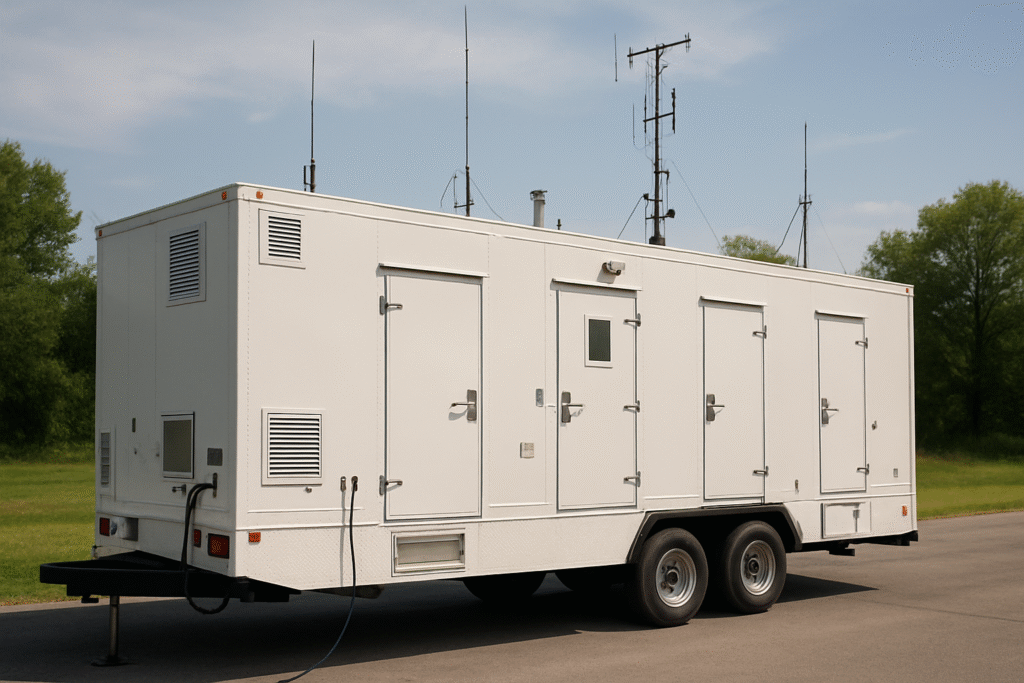
Command container trailers eliminate these challenges by providing fully functional command centers that can be operational within hours of arrival. They bring everything needed for effective disaster management: communication systems, workspace, climate control, and power generation.
Mobile Command Centers: Technology That Travels
Modern command container trailers are marvels of engineering that pack incredible capabilities into transportable units. These aren’t simple office spaces on wheels – they’re sophisticated technological platforms designed specifically for emergency operations.
Advanced Communication Systems: Each trailer typically includes multiple communication technologies: satellite internet, radio systems, cellular boosters, and backup communication networks.
Integrated Technology Platforms Inside these trailers, you’ll find:
- Multiple computer workstations with specialized emergency management software
- Large display screens for mapping and situational awareness
- Video conferencing capabilities for remote coordination
- Data servers for managing victim information and resource allocation
Self-Sufficient Operations Command container trailers come equipped with their own power generation, climate control, and even basic living facilities. This independence means they can operate in areas where local utilities have been compromised or destroyed.
Real-World Applications in Disaster Scenarios
Natural Disasters During flooding events, these mobile command centers can be positioned on high ground while coordinating rescue efforts in affected areas. After tornadoes, they provide the stable communication platform needed to manage search and rescue operations across widespread damage zones.
Wildfire Response Fighting wildfires requires coordinating aircraft, ground crews, and evacuation efforts across vast areas. Command container trailers serve as mobile headquarters that can relocate as fire conditions change, maintaining operational continuity throughout extended firefighting campaigns.
Mass Casualty Events When accidents or attacks create mass casualty situations, these trailers become the coordination hub for medical response, family reunification, and media management.
The Human Element: Supporting Response Teams
Behind all the technology, command container trailers are fundamentally about supporting the people who run disaster response operations. Emergency managers often work 16-hour days in high-stress environments where critical decisions affect thousands of lives.
These mobile command centers provide the basic human necessities that keep response teams functioning effectively. Climate-controlled workspace prevents exhaustion from extreme temperatures.
Proper lighting reduces eye strain during long shifts. Ergonomic workstations help prevent the physical fatigue that can impair decision-making.
Rapid Deployment: Getting Help Where It’s Needed
Transportation Flexibility: These trailers can be transported by truck to most locations or airlifted to remote areas when necessary. Some models are designed to be broken down into components that fit in standard cargo aircraft, then reassembled on-site.
Quick Setup Procedures: Modern command container trailers are designed for rapid deployment. Most can be operational within 30 minutes of arrival, with automatic systems that deploy satellite dishes, extend work areas, and establish power connections.