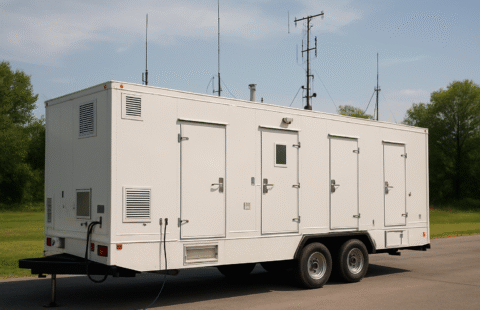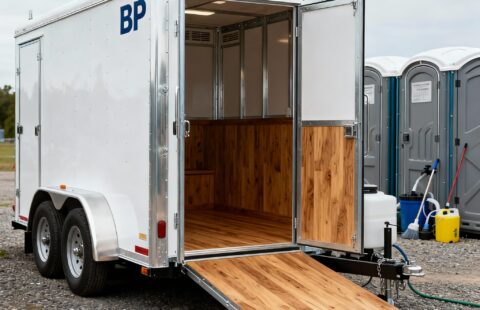
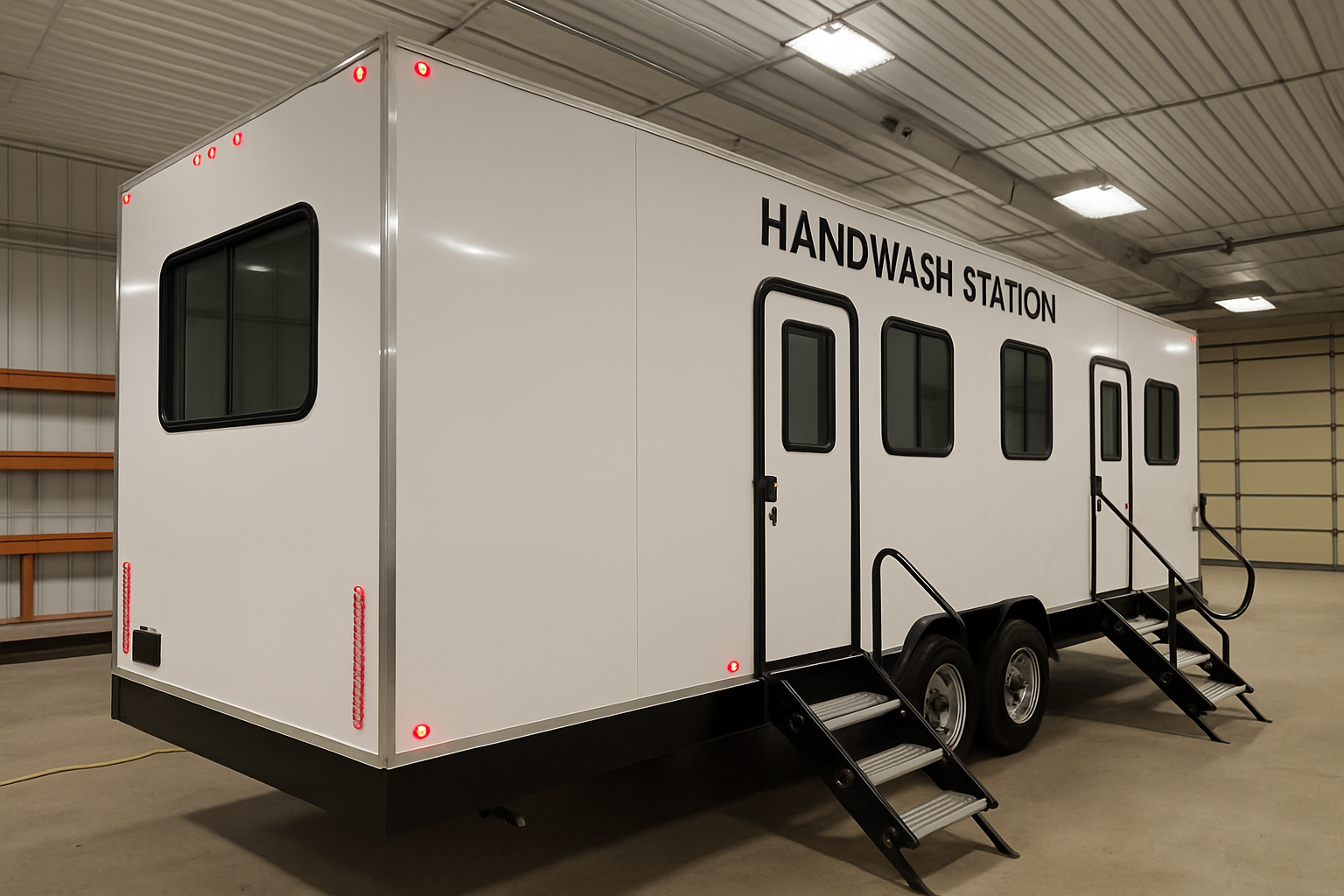
Mobile Handwash Stations: Essential for Worker Safety and Hygiene
Walk onto any construction site, outdoor event, or emergency response area, and you’ll quickly notice something that might seem simple but is absolutely important that is access to proper handwashing facilities. Mobile handwash stations have become an indispensable part of maintaining worker safety and public health in environments where traditional plumbing simply isn’t available.
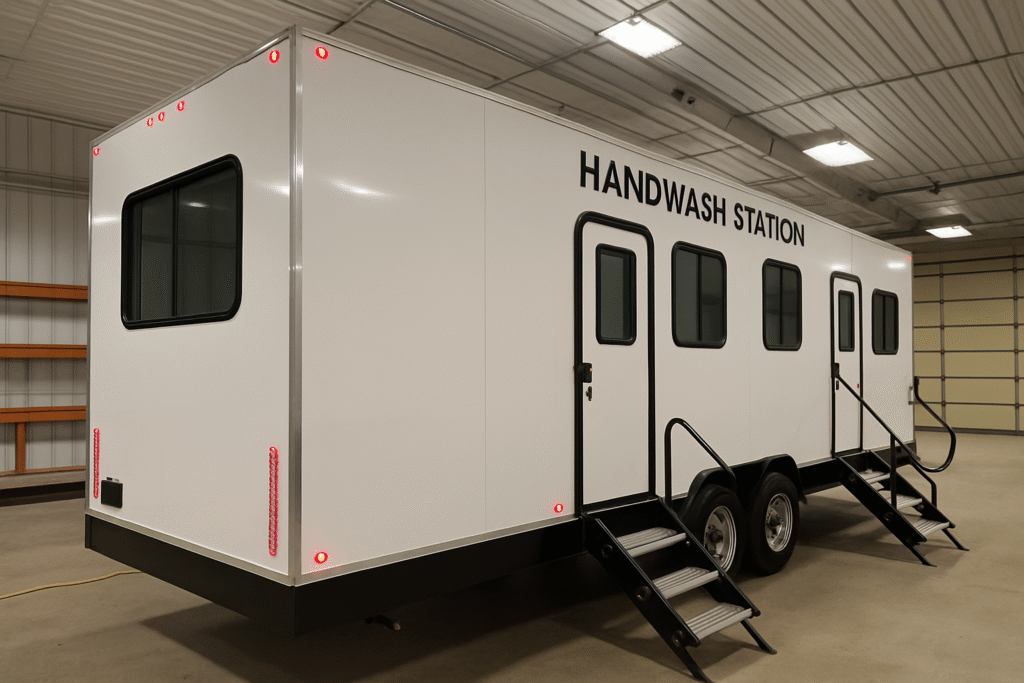
The Critical Role in Worker Health and Safety
Mobile handwash stations serve as the first line of defense against the spread of infectious diseases in workplace environments. When workers lack access to proper handwashing facilities, they become vectors for illness transmission that can shut down entire projects or operations.
Consider a typical construction site where workers handle materials contaminated with dirt, chemicals, and potentially hazardous substances. Without adequate handwashing facilities, these contaminants travel from hands to food, faces, and personal items.
Construction Sites: Beyond Basic Compliance
Construction environments present unique challenges for maintaining worker hygiene. Job sites are often located far from existing infrastructure, projects move locations frequently, and work conditions expose personnel to various contaminants throughout the day.
Mobile handwash stations address these challenges by providing self-contained hygiene facilities that can be positioned wherever they’re most needed. On large construction projects, multiple stations might be strategically placed to ensure workers never have to travel far to wash their hands properly.
Outdoor Events and Public Gatherings
Large outdoor events present logistical challenges that mobile handwash stations are specifically designed to address. Whether it’s a music festival, sporting event, or community gathering, proper handwashing facilities are essential for public health.
Event organizers must consider not just the number of attendees, but also the duration of events, types of food service, and activities that might expose participants to contaminants. Mobile handwash stations can be scaled to match event needs, from single units for small gatherings to elaborate handwashing facilities for major festivals.
Features That Make the Difference
Not all mobile handwash stations are created equal. The most effective units include features that encourage proper handwashing while standing up to the demands of intensive use.
Essential Components:
- Foot-operated pumps to prevent hand contamination
- Adequate water capacity for expected usage levels
- Soap dispensers that resist vandalism and weather
- Paper towel dispensers with sufficient capacity
- Waste collection systems for used towels
The durability of these stations is equally important. They must function reliably in extreme weather conditions, resist vandalism, and maintain sanitary conditions even under heavy use.
Maintenance and Service Considerations
Effective mobile handwash stations require regular maintenance to remain functional and sanitary. Understanding these requirements helps organizations budget appropriately and ensure their hygiene infrastructure remains effective.
Regular Service Needs:
- Water tank refilling and waste removal
- Soap and towel replenishment
- Cleaning and sanitizing of all surfaces
- Mechanical system maintenance and repairs
Technology Integration and Smart Features
Modern mobile handwash stations increasingly incorporate technology that improves their effectiveness and provides valuable data about usage patterns.
Smart Monitoring Systems:
- Sensors that track water levels and usage rates
- Automated alerts when refilling is needed
- Usage data for optimizing placement and capacity
- Remote monitoring capabilities for efficient service scheduling
Choosing the Right Solution for Your Needs
Selecting appropriate mobile handwash stations requires careful consideration of your specific requirements and operating environment.
Key Selection Factors:
- Expected daily usage volume
- Duration of deployment
- Environmental conditions
- Transportation and setup requirements
- Budget constraints and service availability
Different applications call for different solutions. A short-term construction project might need basic units, while a long-term emergency response operation could require more sophisticated stations with enhanced features and capacity.